Ramadan and Beyond: A State of Gratitude
By Ustadha Urooj Shahid
Has the month of Ramadan ever left you feeling a huge weight of regret on your shoulders which has left you feeling discontent and sad despite engaging in worship throughout the blessed days of Ramadan? You are not alone in feeling this overwhelming guilt.
But today, I would like you to reflect on your state of worship and inner feelings as they were before Ramadan and now, after the month has finished.
What is your daily or even weekly worship like outside of Ramadan? How long do you spend on your prayers, do you pray voluntary prayers? Do you read and listen to lots of Qur’an every day? Do you engage in good deeds?
In Ramadan were you able to fast, pray your prayers on time, maybe even read some voluntary nawafil prayers or Taraweeh in the mosque? Were you able to increase the amount of charity you give and engage in more good deeds generally?
For most people the answer is probably an overpowering Yes!
Now compare this to your level and quality of worship outside of Ramadan. Are you even able to do half as much worship outside of Ramadan, compared to the amount you did, with the level of concentration and devotion which you did during the month? For the majority of people their level of worship goes down as the month ends and as we become busy celebrating Eid and getting back to our routine life.
This reality should allow us to reflect that what we were divinely enabled to achieve and perform in terms of good deeds and worship was merely toufeeq (divine assistance) from Allah Most Merciful.
We as human beings do not have the capacity to be engaged in worship throughout our daily lives. We cannot come even close to that level of worship outside the month of Ramadan. Any toufeeq to do good comes purely from Allah, it is not something which we have earned or deserve.
Any ability we had to perform righteous actions such as fasting, praying and giving in charity came only from Allah, it was not our own innate ability. Therefore, it follows that thanks and gratitude is due to Allah and Allah alone for enabling us to engage in a month of worship and obedience.
Undoubtedly, Allah makes it easier for us to carry out the worship in Ramadan (such as by locking up the rebellious devils and multiplying the rewards attached to our good deeds) so that we can taste this sweetness of feeling a connection with our Creator Allah. But ultimately, the ability and divine enablement come from Allah and it does not belong to us.
Therefore, we should have hearts filled with an overwhelming sense of gratitude towards Allah for this favour which He blessed us with in Ramadan.
We should really echo and feel the sentiment behind the words of Prophet Shuʿaib (ʿalayhi as-salām) from Surah Hūd:
“My toufeeq (success or ability to do any good) comes from none but Allah.”
(Surah Hūd, verse 88)
…and feel a great level of gratitude in our hearts rather than regret for what we may have missed out in Ramadan.
Furthermore, elsewhere Allah mentions that if we are grateful servants then He will grant us increase:
“If you are grateful, I will surely increase you [in favour].”
(Surah Ibrāhīm, verse 7)
This increase in favour could be in the form of continued guidance to do good deeds outside of Ramadan, steadfastness upon the religion, a perpetual state of gratitude towards Allah and much more.
To glorify Allah for having guided us to Islam, for guiding us in the month of Ramadan and to become grateful servants was one of the overall objectives behind the month of Ramadan. Allah states in Surah al-Baqarah when referring to the month of Ramadan:
“Allah intends ease for you and does not intend hardship for you, and [wants] you to complete the period [of fasting] and to glorify Allah for that He guided you, so you may become grateful.”
(Surah al-Baqarah, verse 185)
So let us fill our hearts with gratitude that Allah guided us to Islam and enabled us to worship Him in Ramadan, for surely there are people who have not been given this blessing.
If we have indeed been blessed by Allah with His favours, then we must thank Him and pray for the good deeds to be accepted. So do not carry around a burden of regret and dismay at the end of Ramadan but rather be grateful for the fact that Allah allowed you to live through the blessed month and allowed you to rekindle your connection with Allah.
Carrying the Connection Beyond Ramadan
Let the beautiful connection you established with Allah continue beyond the month. One way to show gratitude is to utilise the blessings He has blessed us with.
Some practical things which you can do are as follows:
- After at least one prayer, sit and make duʿāʾ until you feel that your heart is open and that your needs are pouring out from your heart. Make heartfelt supplication for others to begin with, for their needs if you cannot think of what to ask for yourself. Keep that connection with Allah strong; turn to Him for all your needs.
- Read at least two units of nafl (voluntary) prayers each night, sometime after ʿIshāʾ prayer.
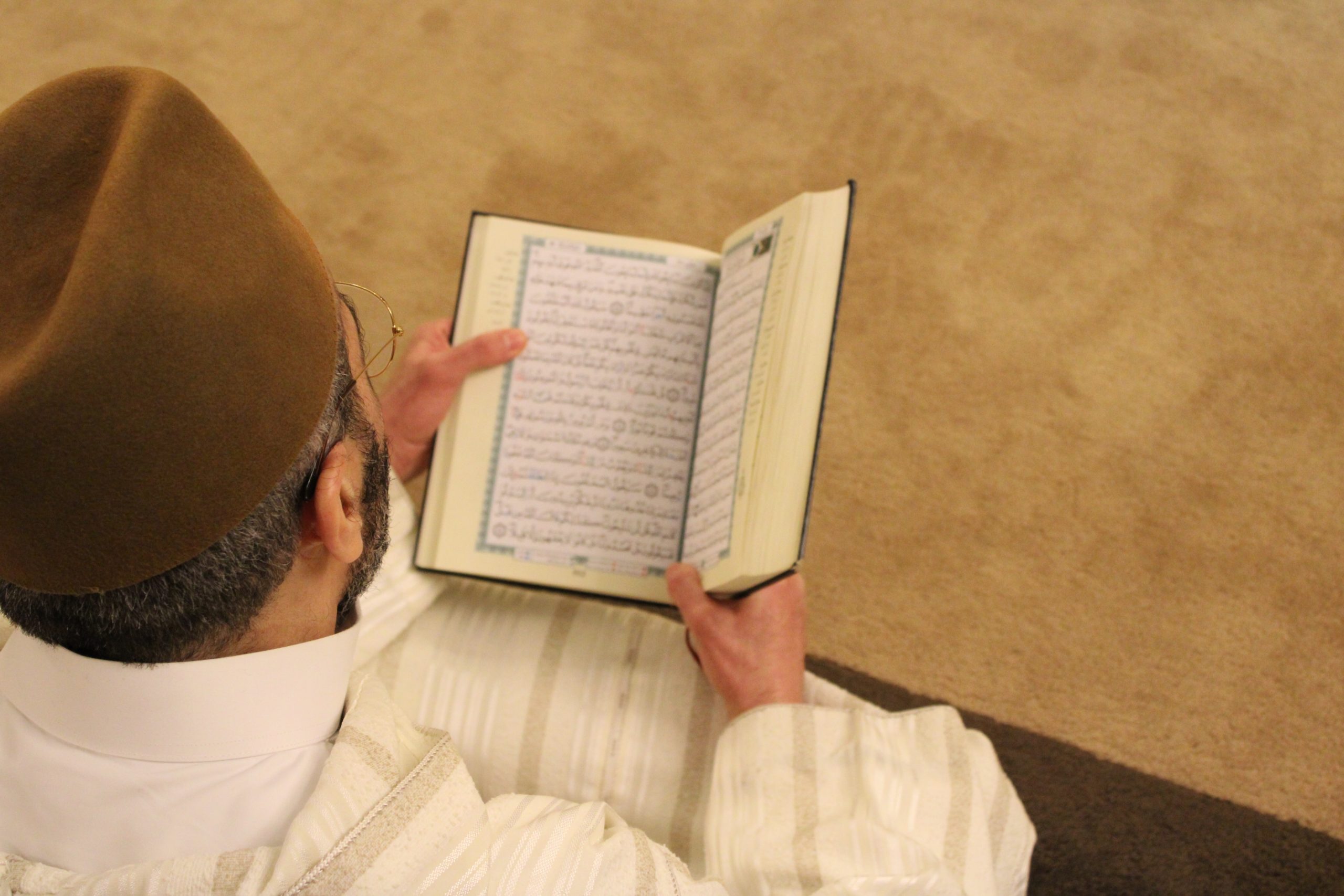
- Ensure you have a daily portion of the Qur’an which you do not fail to complete, whether it be one verse, one page or one chapter that you read. Consistency is key, so whatever is easy for you to maintain, keep it up and do not sleep until you have completed it.
- Try to keep the six fasts of Shawwāl, which is a sunnah. Then after this month try to fast on the sunnah days, whether this means just Mondays or Thursdays (or both days), or the 13th, 14th and 15th of each lunar month.
- Lastly, find one good habit which you were trying to develop in Ramadan and keep it up. Finally, find one bad habit which you were trying to leave in Ramadan and strive hard to abstain from it.
May Allah continue to give you toufeeq and shower you with His favours throughout the year!