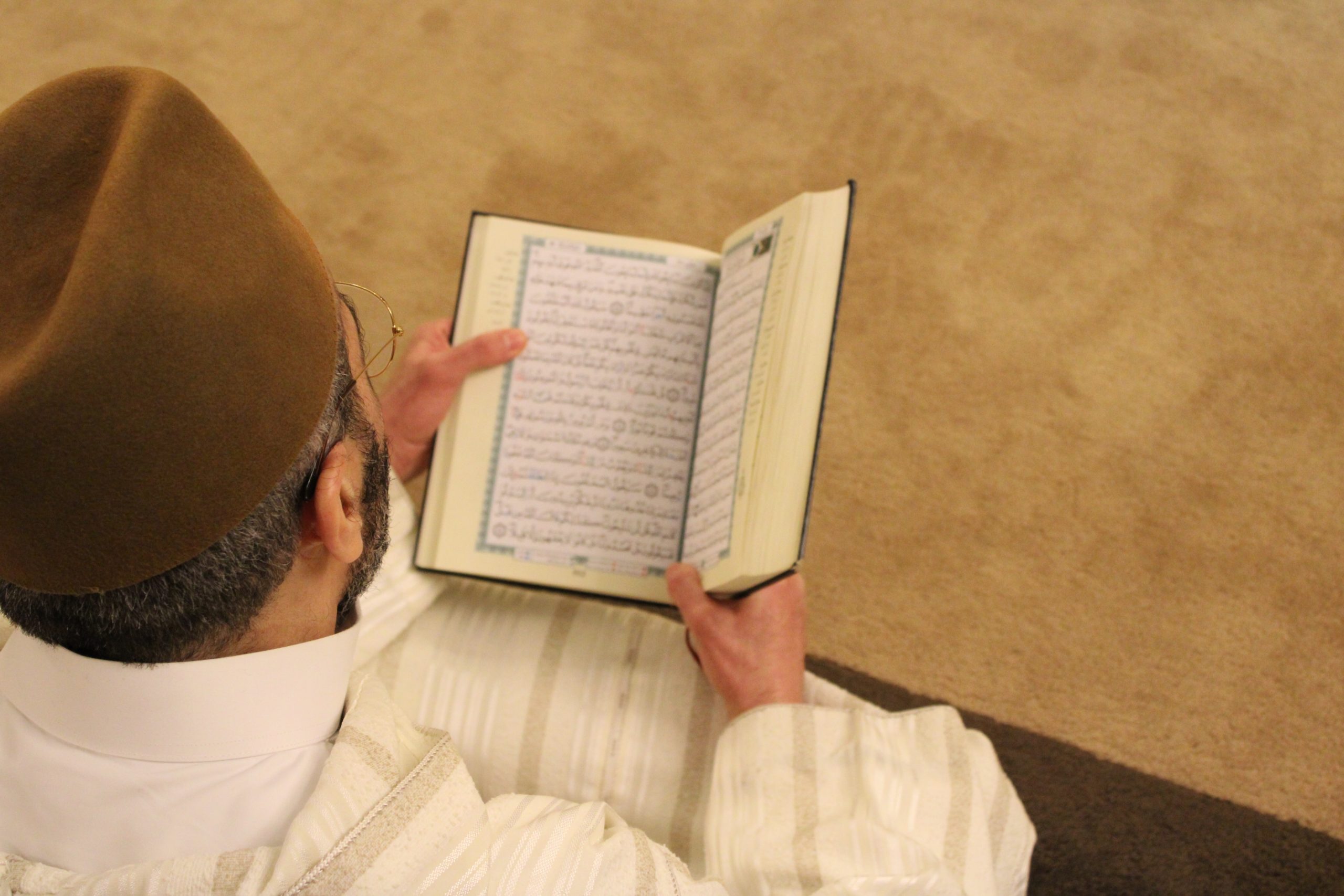
Choosing Islamic education for your child is one of the most meaningful decisions a parent can make. In the UK, the landscape is diverse—ranging from part-time madrasahs and weekend schools to private tutors and, for a minority, full-time Islamic schools. Yet, regardless of format, this choice carries lifelong implications. It shapes not just what your child knows, but who they become, how they see the world, and how they embody faith in daily life.
Many parents approach Islamic education with basic goals in mind: learning to read Qur’an, memorising foundational teachings, and ensuring their child preserves a sense of Muslim identity. These are essential foundations, but Islamic education can offer far more. At its best, it cultivates deep conviction (yaqeen), a commitment to worship, an akhira-focused mindset, noble character, critical thinking, and a sense of purpose rooted in faith.
However, it is often observed that parents have very low expectations of the Islamic education provider, whether that is a private teacher, a mosque, or a madrassa setting. This stands in stark contrast to the high expectations they have for the providers of their child’s secular education. The expectations for Islamic education are much lower in every sense—administratively, in terms of curriculum, pedagogy, the quality of teachers, and their training.
This duality is morally questionable, and we should expect to be accountable for it before Allah on the Day of Judgment. The Prophet, may Allah bless him and grant him peace, said: “All of you are shepherds and each of you is accountable for his flock. A man is the shepherd of the people of his house, and he is accountable. A woman is the shepherd of the house of her husband, and she is accountable. Each of you is a shepherd and each is accountable for his flock.”
It is imperative, therefore, that we, as parents, elevate our expectations of Islamic education providers. Similarly, as providers, we must elevate our standards of provision for Islamic education to ensure it receives the same level of importance and quality as secular education.
If you’re at the crossroads of choosing a full-time school, part-time madrasah, or private tutor, it’s important to know what truly matters. Below, we explore six essential features that are necessary for Islamic education to be source of lifelong growth, meaning, and excellence. We must not only expect them, but we must demand them from our Islamic education providers.
1. Systematic: Structured, Purposeful, Outcomes-Oriented
A well-organised Islamic education is not random or piecemeal. It follows a clear curriculum that builds knowledge and understanding step-by-step, prioritising shariah objectives over cultural habits and customs. This means that what is taught should have a logical progression, starting from foundational beliefs and practices, and moving toward the development of character and deeper faith.
- Is there a syllabus with defined learning outcomes?
- Are topics taught in an age-appropriate, logical sequence?
- Does the programme guide children from the basics of belief to practical worship and character building?
A systematic and outcomes-driven approach ensures children receive coherent instruction that nurtures both the intellect and the spiritual heart. Parents should look for schools or tutors who clearly communicate what children will learn at every level and stage, how progress will be measured, and how each stage of learning builds towards greater understanding and maturity.
2. Responsive: Relevant to Your Child’s World
Children today face unique challenges—social media, identity confusion, peer pressure, contradictory teaching at school, and a rising tide of mental health concerns. Islamic education must be responsive to these realities. It should not retreat into the past or ignore contemporary issues but rather engage with them through an Islamic lens.
- Does the teacher or madrasah truly understand your child’s context?
- Are contemporary issues openly discussed and analysed in light of Islamic teachings?
- Is there space for questions, even doubts, and honest dialogue?
Responsive education enables children to connect Islam with their daily experiences, helping faith become a source of empowerment and relevance. Look for settings where teachers recognise the pressures children face, and where Islamic teachings are presented as a source of guidance, resilience, and meaning in modern life.
3. Transformative: Inspiring Spirituality, Worship, and Character
Education should inspire change, not just impart information. A transformative Islamic education goes beyond memorising facts and rituals—it stirs the soul, inspires worship, and encourages the development of noble traits (makarim al-akhlaq).
- Does the curriculum include concepts like ihsan (excellence), halawatul iman (sweetness of faith), and shu’abul iman (branches of faith)?
- Is worship taught as both a ritual and a spiritual experience (e.g., the rules of salah and khushu’ in salah)?
- Are children guided to embody humility, honesty, patience, generosity, and other noble characteristics?
- Is there a deliberate effort to cultivate aversion to sinfulness, injustice, and negative traits?
Transformative education nurtures spiritual consciousness and connects the child’s heart to Allah. Furthermore, it is my firm conviction that noble characteristics (e.g., honesty, humility, patience, generosity) should be taught as theoretical curriculum content so that children have a deep understanding of them, as well as their opposite destructive traits (e.g., dishonesty, arrogance, impatience, greed). Experiential character development should be built on top of that knowledge – knowledge and application. Parents should look for schools or tutors who inspire children to apply their Islamic learning at home, to pray not just out of duty, but out of love; honesty and compassion in daily life; and who help children internalise Islamic values so they become lifelong habits.
4. Unifying: Promoting Unity Over Sectarianism
A good Islamic education connects children to the universals of Islam—belief in Allah, love for the Prophet ﷺ, piety, good character, and shared values. It should not divide children into sectarian or ideological camps. Sadly, some programmes subtly or overtly teach children to identify with labels like Barelwi, Deobandi, Salafi, Sufi, and others.
- Is Islam taught as a universal and unifying tradition, or is the focus on a specific group or ideology?
- Are different perspectives (within the Sunni tradition) presented inclusively respectfully and rationally?
- Does the teacher emphasise connection to Allah and the Prophet ﷺ, and Islamic values, rather than loyalty to a group or scholar?
Unifying education builds confident Muslims who respect diversity, seek common ground, and contribute positively to the ummah without getting distracted by sectarianism. It should present the richness of Islamic thought as a source of depth, beauty, and unity, not conflict, and encourage children to appreciate legitimate differences within the tradition.
5. Orientational: Shaping a Muslim Worldview
Islamic education should help children develop a distinct worldview—one that centres on Allah, His Messenger ﷺ, and the ultimate purpose of life. Furthermore, it should enable them to resist and critically engage with other pervasive worldviews, such as secularism and liberalism, based on their Islamic worldview.
- Does the education help your child think like a Muslim?
- Are they encouraged to reflect, ask questions, and seek meaning?
- Is Islam presented as a comprehensive way of life?
- Is there critical engagement with other ideas and worldviews?
Orientation is about more than information—it’s about thought. Seek out programmes where children are encouraged to reflect deeply, connect faith to purpose, and develop clarity and confidence through Islamic theology.
6. Islamic Sciences-Based: Connecting to Tradition and Pathways
A robust Islamic education introduces children to the Islamic sciences—the disciplines that have nourished Muslim thought for over 1300 years. Even in part-time settings, children can glimpse the foundations of aqeedah (creed and theology), fiqh (jurisprudence and legal reasoning), tafsir (Qur’anic interpretation and the Qur’anic sciences), hadith (both narrations and hadith studies), Spiritual development (tasawwuf and Ihsan) and Arabic language, and understand how these connect to a vibrant intellectual tradition and the intellectual giants (ulama) it produced.
- Does the programme reference classical Islamic sciences or, better still, teach them as individual subjects?
- Are children introduced to scholars, texts, and the development of Islamic thought?
- Are pathways available for deeper study, leading to advanced learning for those with interest?
This feature opens the door for children to see Islamic learning as a lifelong journey, not just a weekend chore. For those who develop a passion, it can even lead to advanced studies, including university degrees and scholarly pursuits in the Islamic sciences. What could be a more noble career path for our brightest and best?
Final Thoughts: Your Role as a Parent
The journey of Islamic education does not end with choosing a school or tutor—it continues as your child grows, explores, and faces new challenges. As a parent, your active involvement is essential. Ask questions. Observe the environment. Listen to your child’s experiences and feelings. Your engagement helps ensure that Islamic education is not just about preserving identity, but about cultivating excellence, conviction, and compassion.
It is crucial for parents to demonstrate the importance of Islamic education to their children through their actions by checking homework, supporting learning, creating a home environment of religious practice, and providing encouragement. Attendance is paramount and often where things fail badly. If a child’s school attendance is better than their madrasa attendance, it sends a clear message that the parents do not take madrasa education seriously. This will inevitably be reflected in the child’s engagement with Islamic education. Just as children rarely miss school and only do so for the most severe of reasons, an even greater emphasis must be placed on ensuring consistent attendance for Islamic education. This commitment in practice will reinforce to children the significance of their religious learning.
Remember, the greatest outcome is not just a child who can recite Qur’an or list Islamic rules, but one who lives Islam with clarity, kindness, and conviction. By choosing education that is systematic, responsive, transformative, unifying, orientational, and rooted in tradition, you give your child the tools to thrive—in Iman, in character, and in life.
Let us raise a generation who carry the light of Islam not just in their names and words, but in their hearts and actions. The future of our community—and indeed, the world—depends on how well we nurture the blessing of children with the blessing of Islam.