Unlocking the Potential of the Maktab
What can the success of universal education teach us about the future of Muslim children and the role of the maktab?
| Central idea: the maktab is one of the greatest educational assets British Muslims possess. The task now is to unlock its full potential for the next generation. |
A Quiet Educational Revolution
One of the greatest achievements of the modern world is something we rarely stop to appreciate: almost every child receives an education.
For most of human history, formal education was the privilege of a small minority. Literacy, scholarship and access to structured learning belonged mainly to rulers, religious elites, professionals, merchants and the wealthy. The majority of people grew up with little or no formal education.
The rise of universal education changed this.
When societies committed themselves to educating every child, the effects were enormous. Literacy increased. Opportunities expanded. Economies developed. Public health improved. Communities became more organised, capable and confident. Education did not solve every problem, but it changed the possibilities available to ordinary people.
The lesson is simple but powerful.
When a community takes the education of all its children seriously, the future of that community changes.
For us as Muslims, this raises an important question.
Do we truly recognise the educational asset we already possess?
The Hidden Educational Success Story
British Muslim communities have built something remarkable.
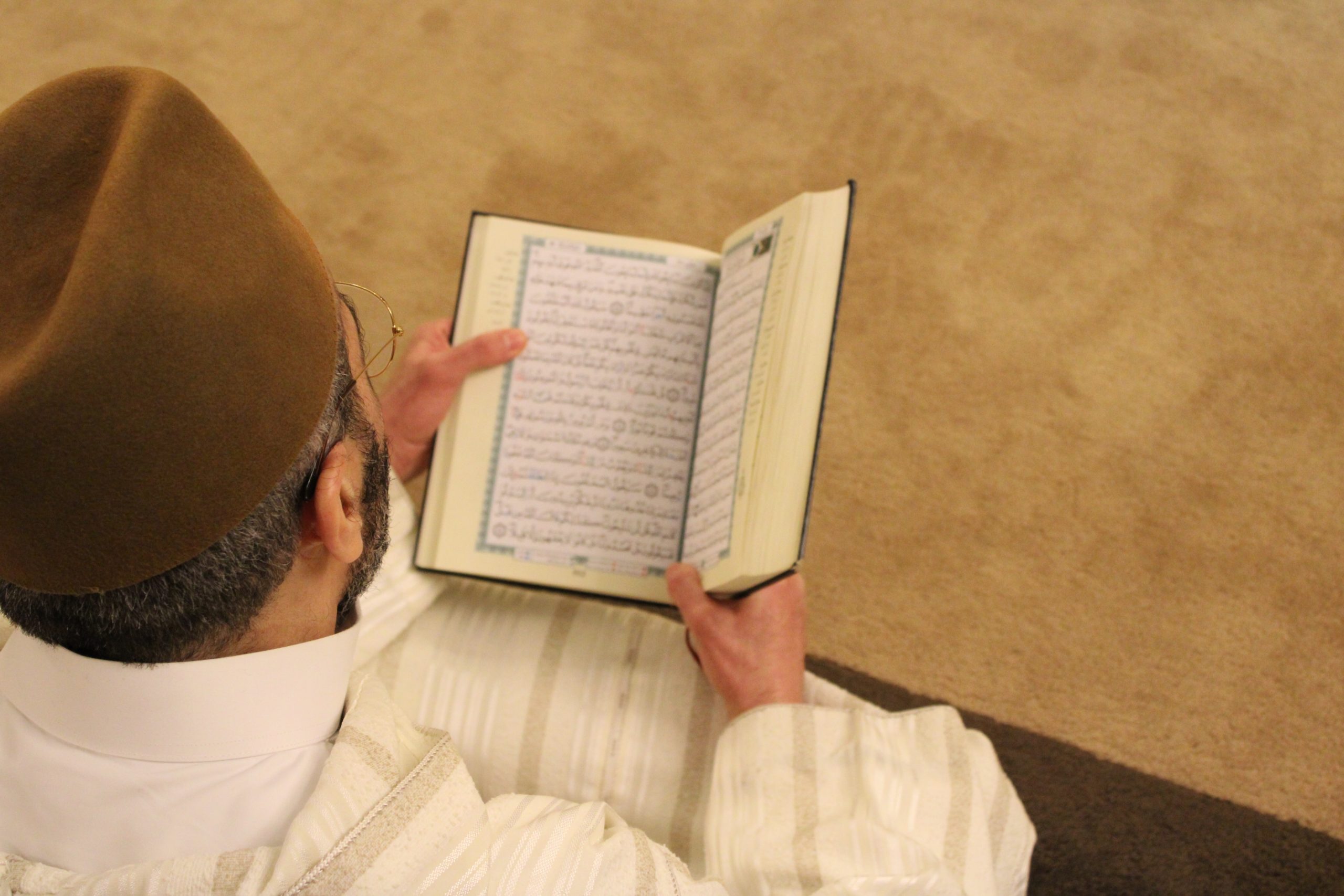
Across the country, thousands of children attend maktabs, madrasahs and supplementary Islamic schools during evenings and weekends. They gather in mosques, Islamic centres, community buildings and classrooms to learn Qur’an, du‘as, Islamic beliefs, worship, manners, stories of the Prophets and the basics of Muslim life.
This is not a small achievement.
In a society where so many institutions struggle to keep children connected to faith, community and tradition, our maktabs continue to bring children through the doors of the mosque week after week. They preserve Qur’an recitation. They teach essential worship. They connect children to teachers, imams and community life. They keep alive a basic level of Islamic literacy across generations.
Without them, much would have been lost.
Many parents, teachers, volunteers, imams and mosque committees have sacrificed time, energy and resources to ensure that Muslim children do not grow up disconnected from Islam. That sacrifice deserves recognition.
This success invites a deeper reflection.
If a large proportion of Muslim children already pass through our maktabs every week, what might become possible if we were able to unlock their full educational potential? What could happen if these institutions not only taught children how to read the Qur’an, but also helped nurture character, identity, wisdom, resilience, belonging and a lifelong relationship with Allah?
These are the questions increasingly confronting many communities today.
The Power of Reach
The true power of universal education was not simply that children studied particular subjects.
Its power was reach.
When every child, or almost every child, receives a structured educational experience, even modest improvements can reshape a whole society over time.
This is where the maktab becomes so important.
Most masjid and community programmes reach a small number of people. A lecture may reach those already interested. A youth event may attract those already confident enough to attend. A course may benefit those whose parents actively enrol them. In these scenarios we are often preaching to the converting.
The maktab is different.
The maktab reaches children as a normal part of Muslim family life.
It reaches the confident child and the shy child. The practising family and the struggling family. The child who loves the mosque and the child who is not yet sure why they are there. It reaches children before they become teenagers, before many of the major life choices are made, and before some of the most difficult struggles have fully taken hold.
That reach is precious.
If we unlock the potential of the maktab, we will not simply improve one educational programme. We may improve the future of an entire community.
The Challenge Facing Maktabs Today
Many maktabs were originally designed around a limited but essential set of aims.
Children needed to learn how to read the Qur’an. They needed to memorise basic surahs and du‘as. They needed to learn how to pray. They needed to know the basic beliefs and practices of Islam.
These aims remain important. They are not optional. A Muslim child should learn all of those things well.
We should never undermine these foundations.
But we also have to be honest. Many maktabs have struggled to move beyond them.
In some places, Qur’an reading dominates almost everything. Children may learn to recite without understanding, and sadly, even without proper tajweed. Memorisation may become disconnected from meaning. Islamic subjects may be taught in isolation from one another. Character development may be assumed rather than deliberately nurtured. Teachers may work hard but without enough training, support or clarity. Parents may measure success mainly by how fluently a child reads, because that is the easiest progress to see.
None of this is surprising.
Qur’an reading is visible. A parent can hear improvement. A teacher can track pages. A child can move from Qa‘idah to Qur’an. Progress feels concrete.
Character is harder to measure. Spiritual growth is harder to measure. Confidence in Muslim identity is harder to measure. Love of Allah and His Messenger ﷺ is harder to measure. The ability to navigate the pressures of modern life with īmān, wisdom and self-control is harder to measure. Yet these are among the most important outcomes of Islamic education.
The Chelmsford Journey
In Chelmsford, we have already been on a journey.
Over the past few years, our madrasah has worked hard to improve. We have strengthened Qur’an teaching. We have improved organisation. We have developed a more coherent curriculum. We have introduced Arabic language. We have expanded spiritual and character education. We have tried to think more carefully about learning outcomes, progression and what children should actually gain from their time with us.
These have been important steps.
But they have also revealed a deeper challenge.
The challenge we face is not a failure of effort. It is a challenge of maturity.
When a madrasah becomes more organised, the next set of questions becomes unavoidable. Once Qur’an teaching improves, we begin to ask whether children are understanding what they read. Once Islamic studies becomes more structured, we begin to ask whether knowledge is changing behaviour. Once Arabic is introduced, we begin to ask whether children are receiving enough contact time to make real progress and understand the Qur’an directly in Arabic. Once character education is added, we begin to ask whether character can truly be formed through isolated lessons alone.
In other words, improvement has revealed the next stage of responsibility.
We are no longer asking only: are children learning Islam?
We are asking: are children being formed by Islam?
That is a much bigger question.
From Information to Formation
A maktab can easily become a place where only Islamic information is delivered.
Children learn facts. They answer questions. They complete books. They pass assessments. They memorise passages. All of this has value.
But Islamic education was never meant to stop at information.
Knowledge is meant to become worship.
Knowledge is meant to become adab.
Knowledge is meant to become self-control.
Knowledge is meant to become humility.
Knowledge is meant to become service.
Knowledge is meant to become a way of seeing the world.
If a child learns about ṣalāh but does not grow in prayer, something is missing. If a child studies the Prophet ﷺ but does not come to know him, love him and take him as a model, something is missing. If a child memorises Qur’an but does not begin to feel that the Qur’an speaks to their life, something is missing.
This does not mean every lesson must become emotional or dramatic. Some knowledge must be taught clearly and academically. Children must learn the rules of worship. They must learn what Allah has commanded. They must learn the foundations of belief. They must become familiar with the Islamic sciences and know that there are serious pathways of learning beyond the maktab.
But the overall purpose must be bigger than coverage.
The aim is not simply to produce children who have completed books.
The aim is to help nurture Muslims who know, love, practise and live Islam with confidence, character and purpose.
A Better Way to Think About Education
Previously in a Friday khutbah, we described education as a pyramid. The foundation was faith and character. The middle was intellectual formation. The top was professional and economic competence.
However, having thought about it, there is a weakness in that image. A pyramid can make the top appear like the highest and most important point. But, professional and economic competence is not the highest point.
That is not what we mean.
Perhaps a better image is a tree.
A simple image may help:
| Image | Meaning | Educational Priority |
| Roots | Faith, worship, character and love of Allah | The source of life and the most important foundation |
| Trunk | Understanding, thinking, identity, language, knowledge and discipline | The strength, structure and direction of the child |
| Fruits | Family life, work, leadership, service and community contribution | Real-world responsibility, made meaningful by strong roots |
The roots are faith, worship, character and love of Allah.
Without roots, the tree cannot live.
The trunk is understanding, thinking, identity, language, knowledge and discipline.
This gives the child strength, structure and direction.
The fruits are the child’s contribution to the world: family life, work, leadership, service, community contribution and professional responsibility.
The fruit matters. We want our children to become doctors, teachers, engineers, scholars, entrepreneurs, parents, leaders and servants of the community. We want them to be capable in the real world. Economic and professional responsibility are real necessities.
But fruit only grows properly when the roots are strong.
If the roots are weak, outward success can become hollow. If the roots are strong, worldly success becomes a means of worship and service.
That is why the foundation must remain the most important part of the educational vision.
Our children should succeed in the world.
But first they must know who they are, why they exist and who they belong to.
Unlocking the Potential of the Maktab
The next stage for maktab education is not simply to add more subjects.
Our timetable is already full. Children are already tired. Teachers are already stretched. Parents are already balancing school, homework, family life and other commitments. If our only answer is to keep adding more content, we will overload everyone.
The answer has to be more thoughtful than that.
We need to ask what the maktab is really for.
We need to ask what kind of Muslim we are trying to nurture.
We need to ask what experiences, habits, relationships and learning moments are most likely to help that child grow.
That means looking again at everything we do.
How can Qur’an reading lead more naturally to love and understanding of the Qur’an?
How can tajwīd, memorisation, Arabic, du‘as and surahs serve worship rather than remain disconnected subjects?
How can children become deeply familiar with the life and personality of the Prophet ﷺ, not merely as historical information, but as the living model of Muslim character?
How can fiqh be taught with seriousness, clarity and respect, so children know the commands of Allah and how to practise them?
How can sports, activities, service and community life be introduced so that they help children develop patience, discipline, resilience, teamwork and leadership?
How can pastoral care become part of the maktab’s responsibility, so that children are noticed, supported and guided rather than simply taught?
How can teachers be supported so that they are not expected to carry a transformative vision without training, resources and a realistic system around them?
These are not small questions.
And we should be honest: we do not have all the answers yet.
But we do know enough to recognise the direction of travel.
The Priorities Are Becoming Clear
We know that Qur’an must remain central. But Qur’an should not be reduced to pronunciation alone. Reading matters. Tajwīd matters. Fluency matters. Memorisation matters. But the Qur’an is guidance. Over time, children need to feel that they are reading the words of Allah, not merely completing a technical exercise.
We know that Arabic matters. But Arabic needs regular contact. A language cannot be meaningfully acquired through occasional exposure alone. If we want children to make progress, Arabic has to appear across the week and across the curriculum in manageable, age-appropriate ways.
We know that the Prophet ﷺ must become central to formation. Every child should leave the maktab with a deep familiarity with his life, his personality, his mercy, his courage, his worship, his patience, his leadership and his concern for others. Seerah should not merely be a set of events. It should become the heart of character and identity formation.
We know that fiqh must be taught properly. Children must know how to worship Allah. They must learn purification, prayer, fasting and the basic rulings that shape daily Muslim life. Some knowledge must simply be learnt because Allah has commanded it.
We know that character cannot be left to chance. Good manners, honesty, discipline, service, emotional control and respect must be intentionally nurtured. They cannot be treated as automatic by-products of attending a madrasah.
We know that children need belonging. A child who feels no connection to the mosque is unlikely to be shaped deeply by it. The mosque must become more than a classroom. It must become a place of friendship, mentorship, worship, activity, service and safety.
We know that modern challenges require pastoral care. Children are not only learners. They are human beings growing up with pressures, questions, anxieties, temptations and struggles. A serious maktab system must notice children, support families and know when guidance, mentoring or intervention is needed. It must develop infrastructure for this.
We know that teachers need support. Most maktab teachers are not trained educational specialists. Many are dedicated, sincere and hardworking, but they need clarity, resources, training and a system simple enough to deliver well. Any vision that depends on exceptional teachers alone will fail. The system must help ordinary teachers do meaningful work.
These priorities are obvious enough for us to begin. The detailed answers will need to be worked out together.
A Mosque Educational Ecosystem
This is why we need to think beyond the classroom.
A child’s Islamic formation does not happen only in a lesson. It happens through the whole environment around them.
It happens in the Qur’an class.
It happens in the way teachers speak to children.
It happens at break time.
It happens on the football pitch.
It happens during assemblies.
It happens in Ramadan.
It happens when older children are trusted with responsibility.
It happens when a child is struggling and an adult notices.
It happens when children see the mosque as a place they belong.
This is the idea of the mosque as an educational ecosystem.
The maktab remains central, but it is not alone. Around it there may be sports, clubs, mentoring, youth work, service projects, camps, family engagement, pastoral care and opportunities for older children to lead and serve.
Not all of this can be built at once. Not all of it will be easy. But the direction matters. If we only think in terms of lessons, we will try to teach everything. If we think in terms of an ecosystem, we can ask better questions:
What part of the child’s development is best served by teaching?
What part is best served by practice?
What part is best served by relationships?
What part is best served by worship?
What part is best served by service?
What part is best served by play, responsibility and experience?
That question may help us avoid overload.
It may also help us build something more powerful.
Working Together in Chelmsford
The next stage in Chelmsford, or anywhere else for that matter, cannot be the work of one person.
It must be a shared effort between teachers, parents, mosque leaders and the wider community.
We need to think carefully. We need to listen. We need to learn from what has worked elsewhere. We need to recognise what is already strong. We need to be honest about what needs improvement. We need to support our teachers properly. We need to avoid overwhelming children and staff with unnecessary complexity.
Most importantly, we need to agree on the purpose.
What kind of Muslim are we trying to nurture?
A child who can read Qur’an fluently, yes.
But also a child who loves the Qur’an.
A child who knows how to pray, yes.
But also a child who turns to Allah.
A child who knows facts about Islam, yes.
But also a child who can live as a confident Muslim in the world around them.
A child who succeeds at school and work, yes.
But also a child whose success is rooted in īmān, adab and service.
This is the conversation we now need to have.
The Opportunity Before Us
Universal education changed societies because communities decided that every child mattered.
The maktab gives us a similar opportunity.
Not because it is perfect.
Not because it already has all the answers.
But because it reaches children.
Week after week, during weekends and evenings, Muslim children gather in our mosques and madrasahs. They come to learn. They come because their parents still believe Islamic education matters. They come because the community has kept these institutions alive.
That is an opportunity too precious to waste.
If we can renew the maktab, we can strengthen families.
If we can renew the maktab, we can deepen children’s connection to the Qur’an.
If we can renew the maktab, we can help form confident Muslim identities.
If we can renew the maktab, we can build character, belonging and service into the life of the community.
If we can renew the maktab, we can help prepare children not only to succeed in the world, but to live in it as servants of Allah.
The opportunity is already in front of us.
The question is whether we have the vision, courage and commitment to unlock it.