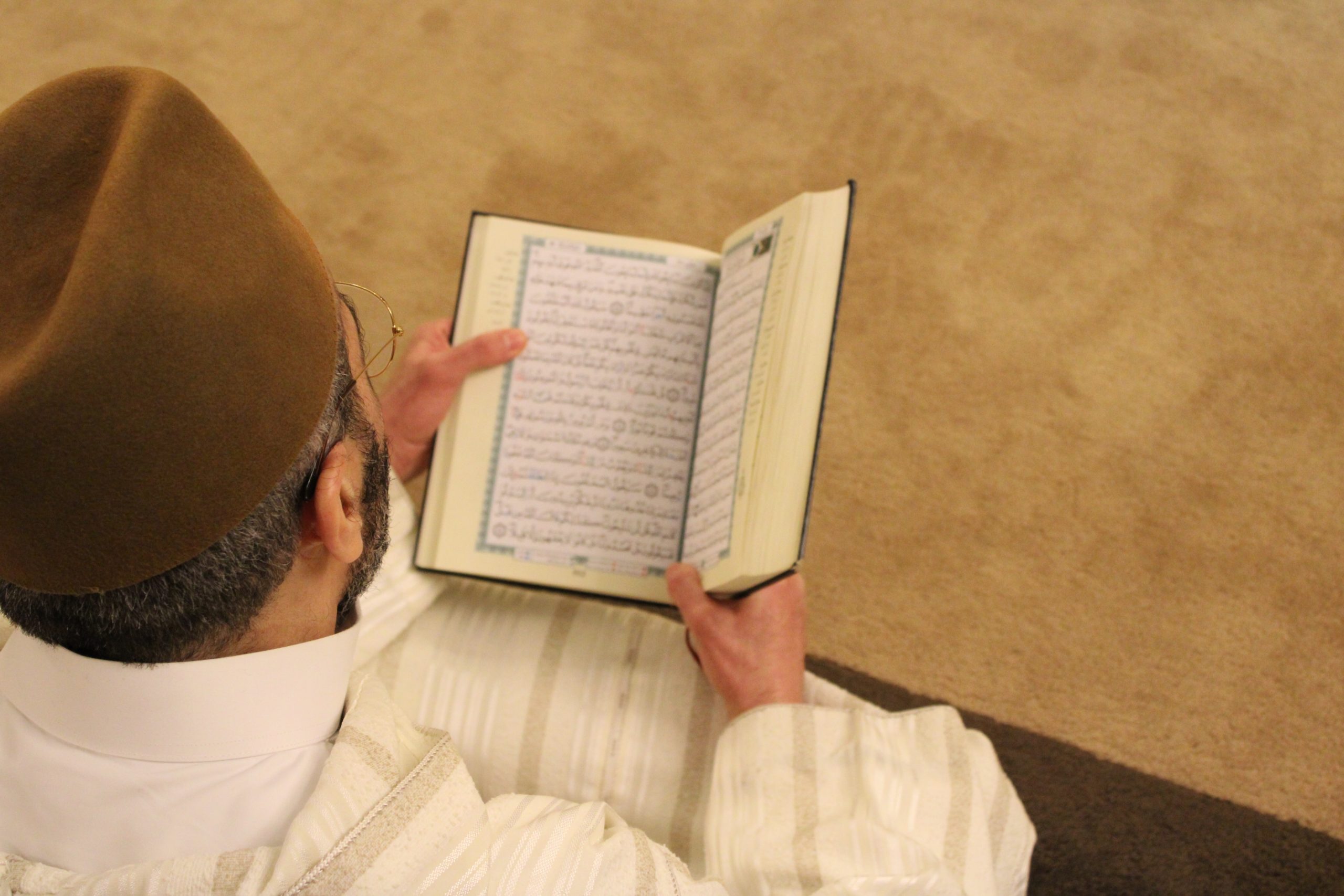
Why our masajid and madrasahs are struggling to address the real crisis facing our children.
A recent discussion among a group of imams, scholars, and community leaders left me reflecting deeply on the state of our communities. The conversation began with concerns about safeguarding, parenting, and the growing gap between what many of our institutions are focused on and what families are actually experiencing on the ground.
The conclusion many of us reluctantly arrived at was uncomfortable: while we have undoubtedly achieved much good, we are often overwhelmed by the conventional and therefore unable to adequately address the necessary.
This is not a criticism of the important work that our masajid, madrasahs, teachers, and imams do every day. Rather, it is a reflection on whether our priorities, systems, and resources are aligned with the realities facing our children and families.
The challenge, however, is not simply one of resources or institutional capacity. If it were, the solution would be relatively straightforward. Capacity can be built. Staff can be trained. Expertise can be brought in. Systems can be developed.
The deeper issue is a mindset problem.
We know the challenges facing our children. We know the dangers they are navigating every day. Yet many of our institutions, and indeed parents too, continue to operate with assumptions, priorities, and measures of success that belong to a different era. In many cases, the conventional has become so dominant that it prevents us from addressing what is actually necessary.
The Crisis We Are Failing to Confront
Our children are growing up in an environment unlike any previous generation.
They are exposed to pornography at increasingly young ages. They face unprecedented pressure through social media. Many struggle with questions around identity, relationships, and belonging. Some become involved in criminal behaviour, gangs, substance abuse, or destructive online cultures. Others quietly battle anxiety, loneliness, addictions, and spiritual emptiness.
Yet much of our communal infrastructure was designed for a different era.
We often find ourselves speaking to practising Muslims about improving their prayer while their children have stopped praying altogether. We encourage people to increase their khushu while their sons or daughters are trapped in addictions that make concentration in prayer almost impossible. We teach the beauty of the Shari’ah while some of our youth are being shaped more by social media influencers than by Islamic scholarship.
Again, none of these reminders are unimportant. They are absolutely necessary.
But too often they are being delivered at the expense of, rather than alongside, serious intervention work that tackles the actual dangers affecting our families.
What makes this especially concerning is that none of these challenges are hidden. Parents know they exist. Teachers know they exist. Imams know they exist. Community leaders know they exist.
The question is not whether we understand the problems. The question is why our institutions continue to devote so much of their energy to activities that, while important, are often insufficient to address the realities unfolding around us.
The Conventional and the Necessary
To understand the challenge, it may help to divide our work into two categories.
The Conventional
Every madrasah and Islamic programme is generally focused on:
- Qur’an
- Fiqh
- Aqidah
- Sirah
- Bayans and general nasihah
These are essential. No one is arguing otherwise.
In fact, every child in every madrasah should receive high-quality instruction in these subjects. Strong Qur’an provision should be the norm. Sound Islamic knowledge should be expected. Excellence in teaching the Islamic sciences should be a basic requirement, not an exceptional achievement.
The fact that we celebrate standards that should be normal often says more about weaknesses elsewhere than about our own success.
The problem is not that the conventional is unimportant. The problem is that our mindset has become so attached to the conventional that we often struggle to imagine success beyond it.
We can easily measure Qur’an completion. We can count attendance at lessons. We can organise timetables around traditional subjects. We can proudly showcase examination results and recitation standards.
But it is far harder to measure whether a young person has developed resilience against pornography, whether they are choosing good friends, whether they can navigate harmful online influences, whether they feel genuinely attached to the masjid, or whether their iman is surviving the pressures of modern life.
As a result, institutions naturally gravitate towards what is familiar and measurable, even when the more pressing needs lie elsewhere.
Yet we must ask an uncomfortable question: If we are doing all of the above, why are so many of our young people still losing their connection with the din?
What Is Necessary but Often Missing
Alongside the conventional, there is another category of work that receives far less attention.
Spiritual Development
Not merely teaching Islam, but helping children build a living relationship with Allah.
Many children can answer questions in a classroom but struggle to translate that knowledge into worship, behaviour, and personal conviction. Spiritual development requires deliberate planning, practical habits, reflection, and guidance.
Transformative Islamic Education
Knowledge must travel beyond the classroom.
Children should be discussing what they learn at home, applying it in daily life, and seeing its relevance to their decisions, relationships, and character. Too often learning remains academic rather than transformative.
Character Development
Parents frequently tell us they want their children to become confident, respectful, disciplined, resilient, and responsible Muslims.
Yet character development requires intentional effort, consistent modelling, and systematic programmes. It cannot be left to chance.
Direct Engagement with Modern Risks
We need far more structured engagement with issues such as:
- Pornography
- Haram relationships
- Social media addiction
- Screen dependency
- Bad company
- Gangs
- Alcohol and substance abuse
- Criminal behaviour
- Harmful ideologies and value systems
These are not fringe problems.
They are among the most significant threats facing Muslim children today.
Yet because many of our institutions are still mentally structured around a conventional educational model, these issues are often treated as occasional topics, special assemblies, or reactive interventions rather than central concerns.
One-to-One Mentoring
Every child needs someone who knows them.
Someone who notices when they are struggling. Someone they trust. Someone who can guide them before problems become crises.
Many institutions recognise the value of mentoring but have not yet reorganised themselves around it.
Robust Pastoral Systems
Perhaps the greatest missing piece across much of our sector is the absence of meaningful pastoral care.
Imagine a system where:
- Families receive regular support and guidance.
- Parents are helped with modern parenting challenges.
- Staff are trained to identify emerging concerns.
- Vulnerable children are noticed early.
- Mentoring is embedded.
- Counselling support is available when needed.
- Intervention happens before damage becomes irreversible.
This requires vision, planning, training, staffing, and investment.
But more fundamentally, it requires leadership to recognise that pastoral work is not an optional extra. It is core religious work.
Relevant and Meaningful Activities
Young people need positive alternatives.
Sports, extracurricular activities, leadership programmes, career guidance, skills development, and enriching experiences all help strengthen a child’s attachment to the masjid and community.
These are not luxuries. They are often essential protective factors and must be structured so all children benefit form them. To understand this, think of it like PE at school, it’s not optional, it’s for all the students. We do have masajid that run sports and youth activities, but these are not structured in a way that benefits all children. They are optional activities at times outside the established contact time with the children. The only way is to embed these activities into the madrasah/maktab schedule.
The Real Barrier: Mindset, Not Capacity
At this point many people will object:
“Our institutions simply do not have the capacity to do all of this.”
There is some truth in that.
Resources are limited. Staff are stretched. Expertise is often lacking.
But if we are honest, capacity is often the symptom rather than the cause.
We acquire capacity for the things we genuinely prioritise.
When a community decides Qur’an teaching is important, teachers are recruited, classrooms are found, fundraising campaigns are launched, and timetables are organised.
When communities decide something is essential, they usually find a way.
The more uncomfortable question is whether we have truly decided that mentoring, pastoral care, parental support, safeguarding, character formation, and intervention work are equally essential.
Capacity can be acquired. Expertise can be brought in. Training can be purchased. Partnerships can be formed. Volunteers can be developed. Systems can be built.
None of these things are easy. But they are all possible.
The real obstacle is that much of our leadership culture remains shaped by inherited assumptions about what successful religious provision looks like.
We continue to think primarily in terms of classes, lessons, lectures, and events, when many of the problems facing our children require mentoring, intervention, pastoral care, family support, safeguarding structures, and long-term relationship building.
In other words, many institutions are trying to solve twenty-first century problems with twentieth century models.
The conventional is comfortable. The conventional is familiar. The conventional is expected.
The community understands Qur’an classes. They understand fiqh lessons. They understand lectures and programmes. Leaders know how to organise them. Teachers know how to deliver them. Committees know how to fund them.
The necessary work is different.
It requires us to leave our comfort zones. It requires difficult conversations. It requires admitting that some of our existing assumptions are no longer sufficient.
Most importantly, it requires a leadership mindset shift.
Not asking: “How can we improve what we already do?” But asking: “What do our children and families actually need from us right now?” Those are not the same question.
The Problem with Side Projects
Many communities can point to excellent activities. A mentoring scheme here. A football programme there. A youth event every few months. These efforts are valuable and should be celebrated. But transformative impact does not come from occasional programmes that reach ten or twenty children. It comes when support systems are embedded and available to every child. The same principle is also true of adult provision.
The challenge before us is not simply creating activities. It is creating systems.
The necessary cannot remain a side project while the conventional receives almost all of our attention.
We Are Working Without a Map
One contribution during our discussion struck me profoundly.
A community leader observed that many mosques do not possess a clear picture of the communities they serve.
Many institutions still operate without a sufficiently clear picture of the communities they serve: the pressures facing local families, the needs of different age groups, the agencies already working in the area, the gaps in provision, and the outcomes they are trying to achieve.
Until leadership starts with these questions, the conventional will continue to dominate because it provides ready-made answers that require little adaptation.
Every masjid should have a clear understanding of its community and a strategic vision for addressing its needs.
Otherwise, we become trapped in a cycle of reacting to problems rather than preventing them.
An Honest Reflection
This article is not written from a position of success. I do not have a model that has been successfully delivered and tested.
In my organization, we are struggling with these same challenges ourselves. The conventional overwhelms us too. Not because we believe the necessary work is unimportant, but because decades of conditioning have trained us to see the conventional as the core mission and everything else as an optional extra.
Parents understandably demand more Qur’an provision. Staffing remains limited. Resources are stretched. Established routines are difficult to change. The urgent constantly pushes aside the important.
Thinking about these issues is far easier than implementing solutions. The mindset ship and support needed elsewhere is needed where I am. We’ve made amazing progress in the four years I have spent as my masjid. But, I have to admit, it’s progress that mainly focused on the conventional.
Yet the reality on the ground is increasingly forcing us to confront a difficult truth: much of what we currently regard as optional has become essential.
A Call for Collective Thinking
We have hundreds of thousands of Muslim children attending our masajid and madrasahs every week. Across the country, they spend countless hours with us. This represents an enormous responsibility and an enormous opportunity.
The question we must honestly ask ourselves is: What transformative impact are we actually having?
Not how many children completed a khatm. Not how many attended an event. Not how many photographs we posted online.
But how many are developing resilient faith, strong character, resistance to modern harms, and a lifelong attachment to Allah, His Messenger ﷺ, and the Muslim community.
These problems are too large for any individual, mosque, or scholar to solve alone. They require collective thinking, shared learning, strategic planning, professional expertise, and sustained collaboration.
Perhaps the greatest challenge before us is not funding, staffing, expertise, or facilities. Perhaps the greatest challenge is finding the courage to rethink what success looks like.
We know our children need Qur’an. We know they need fiqh, aqidah, seerah, and sound scholarship. But we also know they need mentors. They need pastoral care. They need supported parents. They need help navigating pornography, social media, harmful ideologies, addiction, poor mental health, and destructive influences.
The question is no longer whether these needs exist. The question is whether our leadership, institutions, and communities are willing to adjust their mindset accordingly.
Until that happens, the conventional will continue to overwhelm the necessary. And our children will continue paying the price.